
Teach your kiddo to dream big with a vision board
In ABA therapy, we use visual supports, like images and short descriptive words, to help children with autism communicate their feelings, learn new skills, and follow routines that build confidence and peace of mind.
Vision boards are a type of visual support. They consist of a blank pin board or any type of poster board and items you can pin, paste, or secure to the board that depict your dreams and goals. Vision boards can be real or virtual. Making a real one, something you can touch and feel, is more of sensory experience many children with autism enjoy versus creating a vision board on the computer. But all kids with autism are wonderfully unique, so leave it up to your kiddo to decide.
The vision part of a vision board is made up of images, words, and other items that are added to the board, creating a collage representing the goals your child wants to achieve. When finished, a vision board should be inspirational, functional, and assuring all at the same time.
The key is letting your child create their own vision board. It’s best if you can prompt them with questions about their dreams and aspirations to get them thinking in the right direction. You can even make it a regular family activity that you do at the first of the year, the end of the year, or the start of a new school semester. The best part is you’re able to learn more about your amazing kiddo in the process, while teaching them to reach for their dreams – not just think about them!
Tips for making an effective vision board with your child
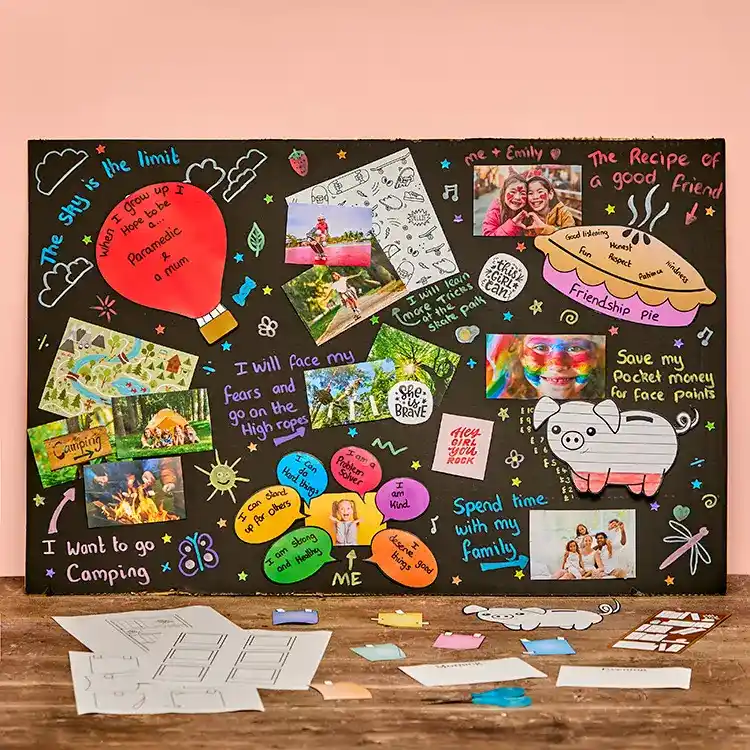
The activity of creating a vision board will encourage your child to explore and dream about what they want for their future, in both the short and long term. When kids know what they’re working toward, a vision board can increase their ability to achieve it.
There is no right or wrong way to create a vision board. However, there ways to enhance its effectiveness and your child’s success using one. These expert tips can help:
Tip #1 – Narrow the focus.
The future is a big place. Especially for a child. Help them narrow their focus to a specific set of goals and period of time, like a school semester or season of the year.
Tip #2 – Keep it personal and fun.
Your child’s vision board should represent their unique personality, goals and aspirations. Let them have ownership of it so they’ll stick with it and build confidence.
Tip #3 – Include steps for reaching each goal.
A goal can seem impossible to a child. Make sure their vision board shows the small, achievable steps for reaching their goals and tracking their progress.
Tip #4 – Keep the vision board relevant.
Talk with your kiddo on a regular basis about their progress on their goals and if their vision board needs to be adjusted to meet changing needs or aspirations.
Tip #5 – Celebrate success at every step.
Positive reinforcement is an important principle of ABA therapy. When your child successfully completes a step toward their goals, let them know how proud you are of them and encourage their continued progress.
Templates and inspiration for getting started
Getting started on a vision board starts with your child thinking and brainstorming about what they want to achieve and setting goals for themselves. Once that’s been decided, it’s all about bringing their vision for their future to life, using pictures from magazines and websites, inspirational words, stickers, markers, drawings, color, construction paper, mementos, glue, pins, and more.
One great option to the classic vision board made from scratch is to use a template that gives your kiddo a head start and guides them in exploring their dreams and goals for the future. Just search online and you can have your pick of templates. Pinterest and Etsy are two of our favorite sites for resources and ideas.
Your child's ABA therapist can help, too!
Ask your child’s ABA therapist about goals that will be beneficial for your child. They’re already working on specific skills with your child and have a plan in place to help your child reach their full potential.
Also, be sure to tell the ABA therapist about the goals on your child’s vision board, so they can work in tandem with your efforts at home to help your child meet those goals and achieve their dreams for the future.
Children can and should start ABA therapy as young as two years old. That’s why an early diagnosis is so important. Decades of research confirms that children who receive ABA therapy during their formative years before starting school achieve the best outcomes in their their development.
If your kiddo isn’t enrolled in ABA therapy yet, make it a priority. You can find the best providers in your area through the only accrediting body for ABA therapy – BHCOE.org.
The Behavior Exchange was the first ABA therapy provider in all of North Texas to receive the highest BHCOE accreditation possible, and we’re proud to serve families in and around Plano, Frisco, and Prosper. If you live in the area, contact us with all your questions about getting started and reaching your goals for your child and family.